


mAI Mind:
Generate ideas, measure success

mAI mind® Features
Used by over 50 schools
Grader over 70,000 essays
Saved teachers over 30,000 working hours
mAI mind® Features
mAI Mind® Chinese Composition AI Assessment is the first system proven through classroom practice to fully support Chinese writing instruction for all levels in Hong Kong’s primary and secondary schools. Integrating artificial intelligence with a knowledge base built by our language experts, it alleviates teachers’ workload while providing students with personalised writing guidance. Our professional team offers comprehensive support, and the powerful data analysis functions help teachers grasp students’ learning progress. It also aligns with school-based assessment, effectively enhancing the efficiency of writing instruction and students’ autonomous learning capabilities, ushering Chinese writing education into a new era of intelligence and digitalisation.


mAI mind® Features
mLang® Multimodal Learning Card
Each learning card has form, sound, and meaning.
Each student-created vocabulary card has form (characters), sound (audio recordings), and meaning (images). This allows students to integrate information, aids in self-directed learning, enhances interest through multi-sensory stimulation, consolidates knowledge, facilitates review at any time, and strengthens language mastery.

Each learning card has form, sound, and meaning.
Each student-created vocabulary card has form (characters), sound (audio recordings), and meaning (images). This allows students to integrate information, aids in self-directed learning, enhances interest through multi-sensory stimulation, consolidates knowledge, facilitates review at any time, and strengthens language mastery.
Each learning card has form, sound, and meaning.
Each student-created vocabulary card has form (characters), sound (audio recordings), and meaning (images). This allows students to integrate information, aids in self-directed learning, enhances interest through multi-sensory stimulation, consolidates knowledge, facilitates review at any time, and strengthens language mastery.
mLang® Multimodal Learning Card
Each learning card has form, sound, and meaning.
Each student-created vocabulary card has form (characters), sound (audio recordings), and meaning (images). This allows students to integrate information, aids in self-directed learning, enhances interest through multi-sensory stimulation, consolidates knowledge, facilitates review at any time, and strengthens language mastery.
Each student-created vocabulary card has form (characters), sound (audio recordings), and meaning (images). This allows students to integrate information, aids in self-directed learning, enhances interest through multi-sensory stimulation, consolidates knowledge, facilitates review at any time, and strengthens language mastery.
Each learning card has form, sound, and meaning.
Each student-created vocabulary card has form (characters), sound (audio recordings), and meaning (images). This allows students to integrate information, aids in self-directed learning, enhances interest through multi-sensory stimulation, consolidates knowledge, facilitates review at any time, and strengthens language mastery.
Each student-created vocabulary card has form (characters), sound (audio recordings), and meaning (images). This allows students to integrate information, aids in self-directed learning, enhances interest through multi-sensory stimulation, consolidates knowledge, facilitates review at any time, and strengthens language mastery.
mLang® How combining verbal and written language with mAI Mind® can improve students' writing skills

1. Integrating reading and writing
Through our "four-stage, three-step" teaching method and mLang® platform, students can complete everything from vocabulary collection to paragraph and essay writing at their own pace.
2. Teacher-student Interaction
Teachers use the "Generate Sample Essays" feature in mAI Mind® to create sample essays and explore writing techniques with students.
3.Self-directed learning
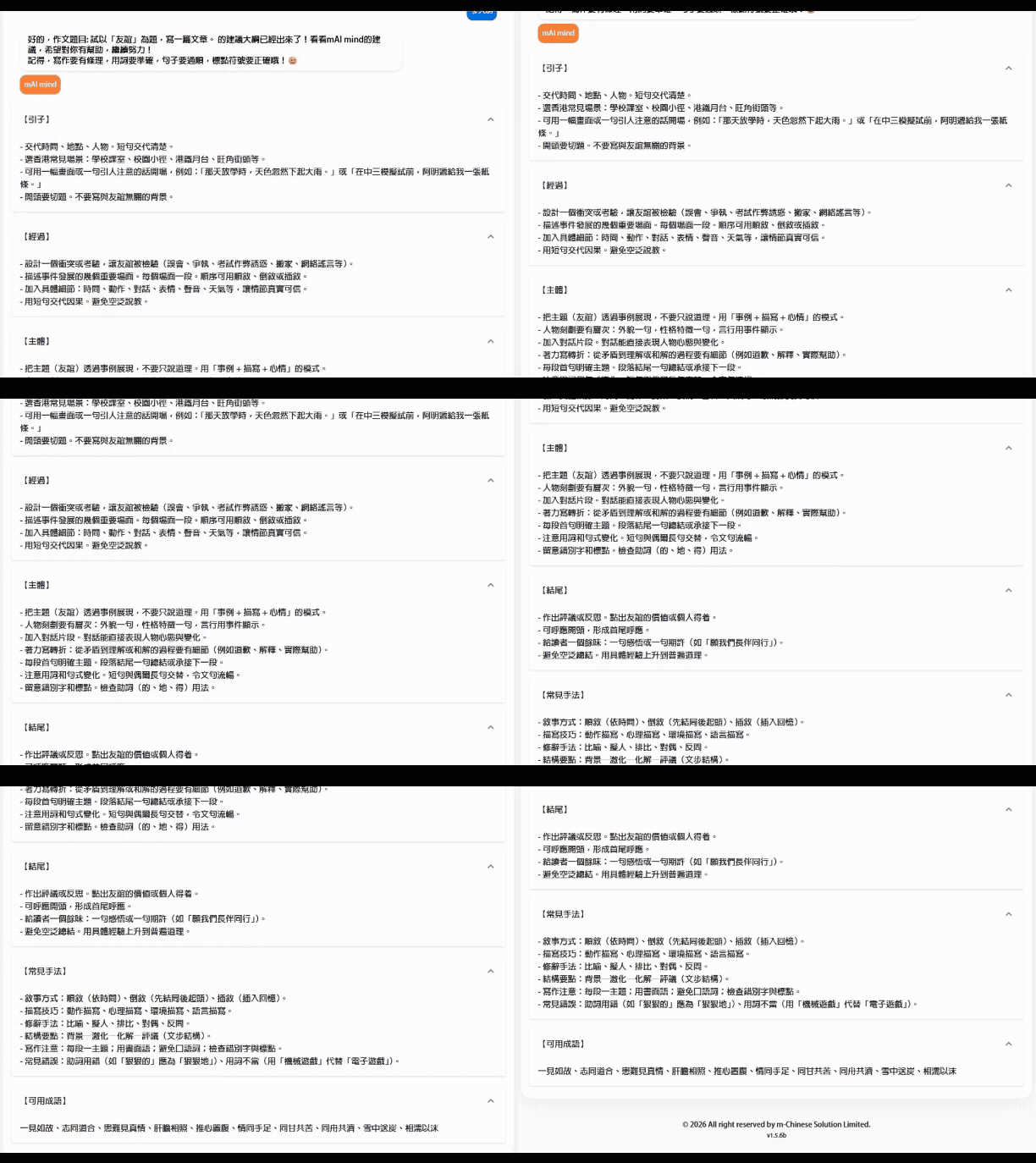
Students can request essay suggestions from the system through the "Generate Essay Suggestions" function. Each suggestion will be recorded and can be reviewed at any time.
Students can directly input their essays into the system, or they can write their essays on writing paper and upload them to the system via OCR technology.
4.Student self-assessment
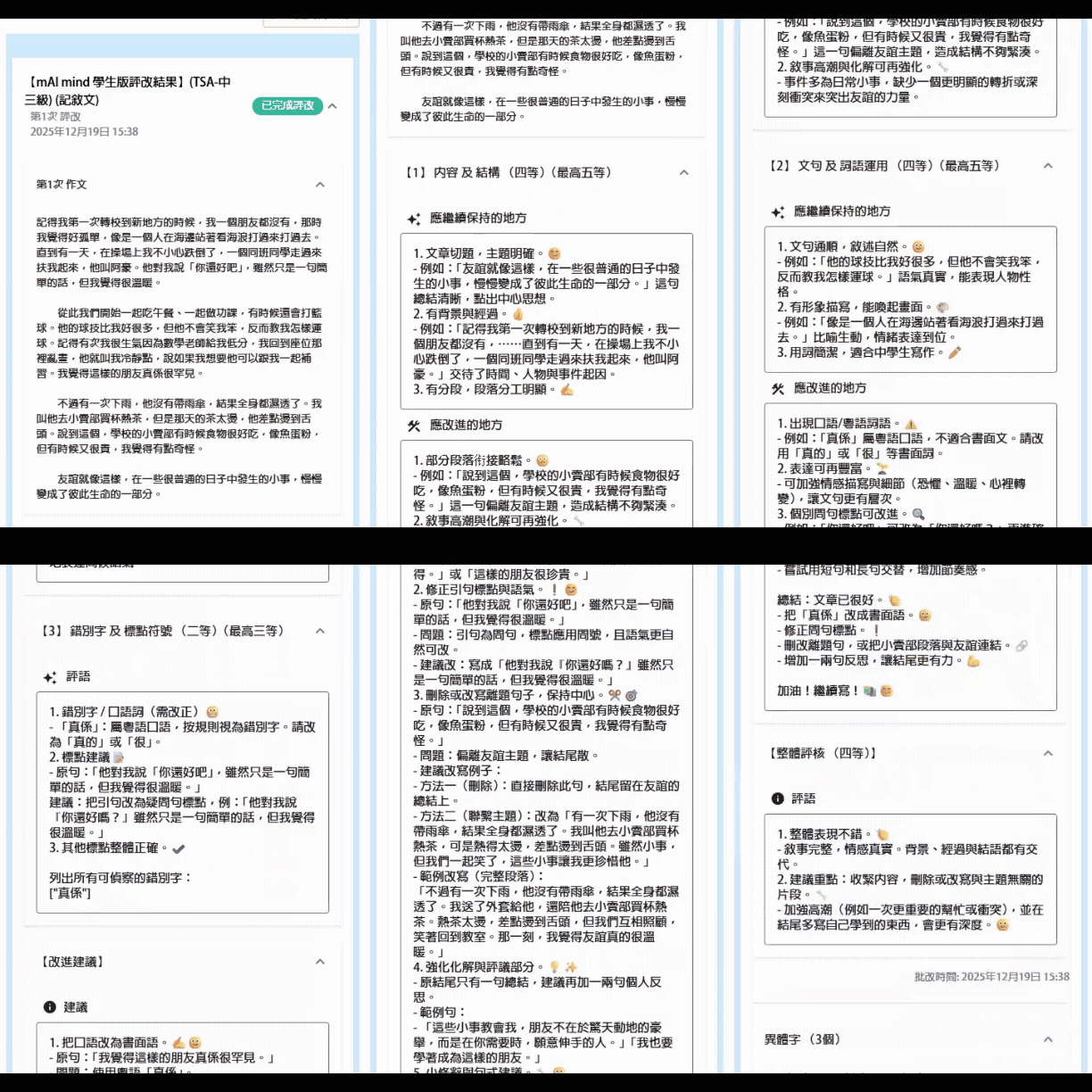
After completing their essays, students can receive initial assessments and suggestions for improvement through "AI Essay Review." They can then repeatedly review the AI's feedback to further refine their work. Only when satisfied do they submit their essays to their teachers, thus cultivating students' self-learning abilities and attitudes, and encouraging them to willingly revise their own writing.
5.Teachers' grading and analysis
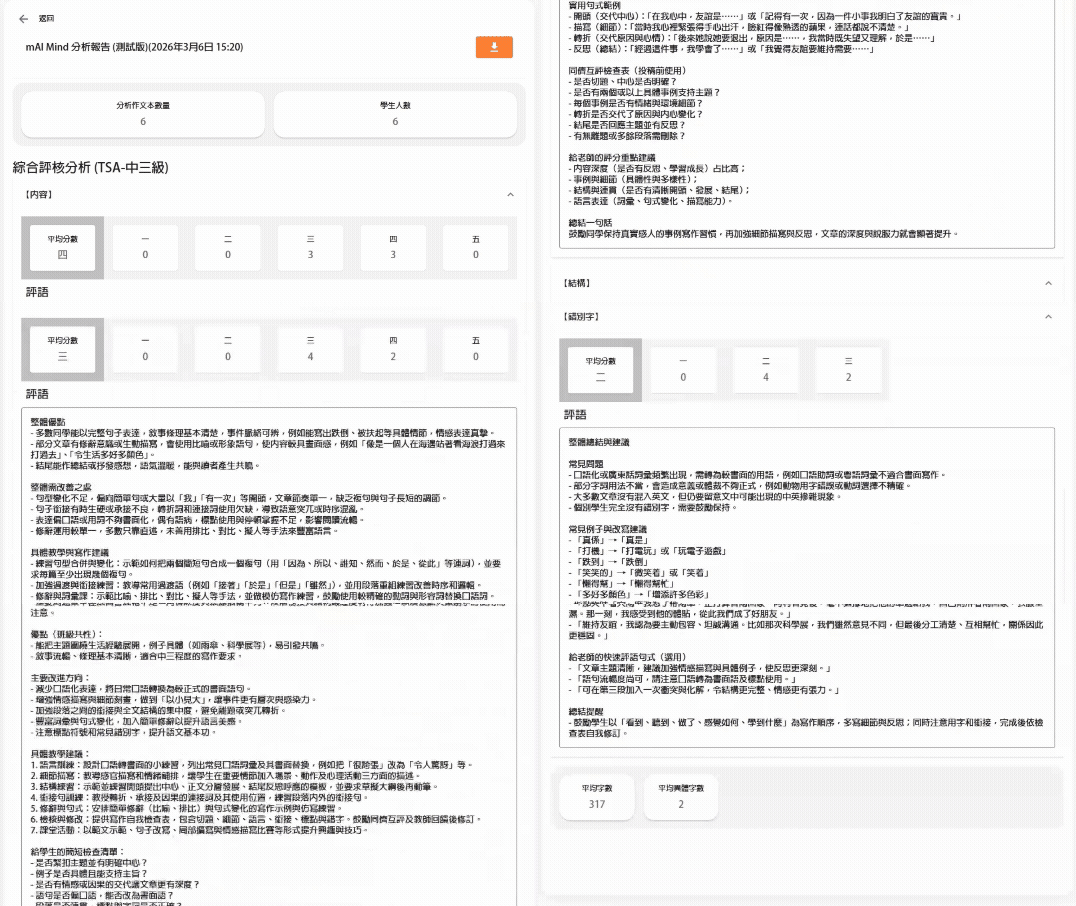
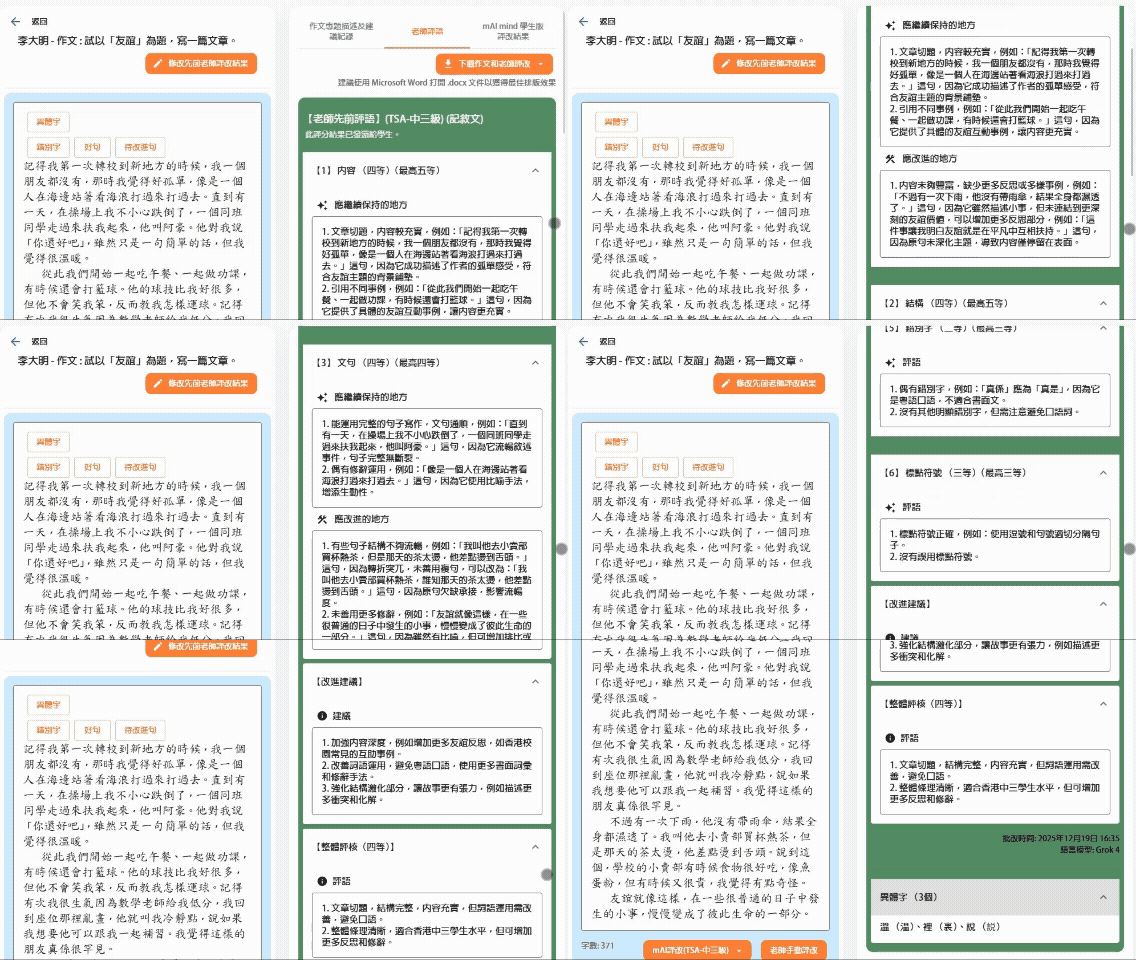
After receiving the student's submitted essay, the teacher can see the AI-generated feedback the student previously received, as well as photos of the essay uploaded by the student. The teacher can request the AI feedback on the platform and make changes or add their own comments as needed before sending it back to the student. Reports can also be downloaded. Simultaneously, the student's personal learning journey can be stored and analyzed.
mAI mind® supports multiple assessment modes

mAI Mind® vs. Directly Using Large Language Models/Other AI Platforms

mAI mind® in action in pilot schools


mAI mind® in action in pilot schools
*Rankings are not in any particular order
小學


中學


After trying it, I found that mAI Mind®'s essay correction is quite accurate and to the point. The comments are concise and usable, and the effect is even better when used with the provided vocabulary list. 👍🏻
Dr. Liao Xian, Associate Professor, Department of Chinese Linguistics, Faculty of Humanities, The Education University of Hong Kong